
Prototype service planning
Rapid Prototype CNC Machining Services
Prototype machining RFQs for rapid prototype CNC parts: state geometry, material, inspection intent, and follow-on production plans before quoting.
Short answer
Prototype CNC machining is the right path when you need machined parts quickly enough to validate fit, function, assembly, or early process risk, but the quote still depends on the controlled drawing, material callout, quantity, and inspection scope rather than on a generic prototype promise.
For prototype machining, the useful question is not only how fast a part can be cut. Buyers usually need to know whether the prototype should mirror an intended production process, whether cosmetic issues matter, which dimensions must already be production-representative, and what can still be treated as learn-and-adjust. A stronger RFQ makes those tradeoffs explicit.
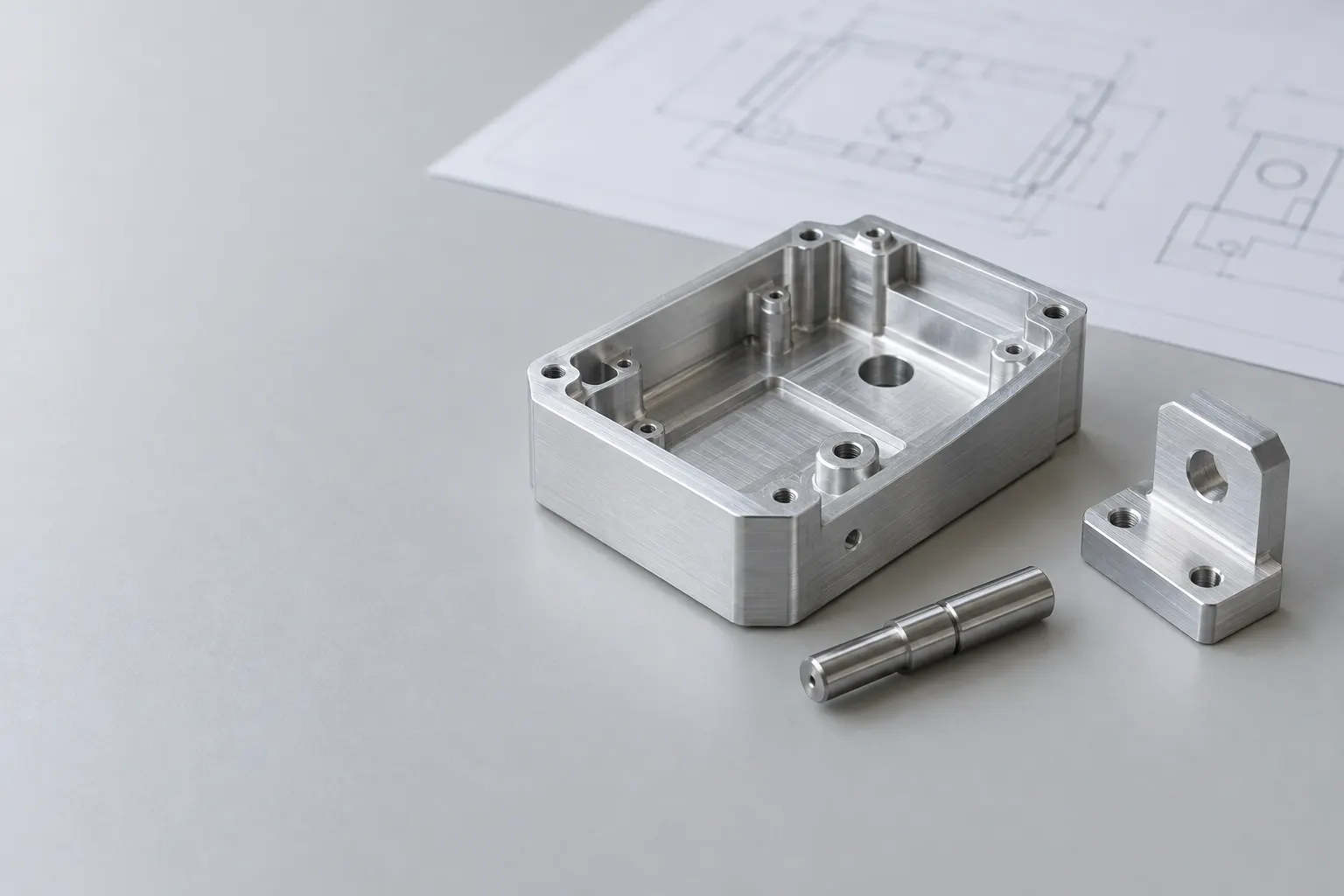
Applicability
Rapid Prototype CNC Machining use cases
Design-validation parts where hole locations, mating faces, and envelope dimensions need to be checked on hardware instead of only in CAD.
First-article prototype sets that should expose manufacturing risks before a broader pilot or low-volume release.
Fixture, bracket, manifold, or enclosure concepts where machining is a practical way to reach functional hardware faster than tooling-based methods.
RFQ inputs
RFQ inputs and drawing requirements
Controlled geometry package
Upload the current CAD model, PDF drawing revision, and any notes that separate critical prototype dimensions from provisional features.
Material and substitute rules
State the exact alloy or polymer grade if it is fixed, or explain what substitutions are acceptable for learning parts versus production-intent parts.
Prototype quantity and decision timing
Clarify whether the request is for one-off validation parts, a short prototype lot, or hardware that could roll directly into a bridge build.
Inspection focus
Identify the datums, fit surfaces, and dimensions that decide whether the prototype is accepted so the quote is built around the right inspection scope.
Constraints
Constraints and quote assumptions
- Prototype machining does not remove the need for drawing clarity; missing datum structure or undefined tolerances still create avoidable quote delays.
- A fast prototype process may not match the exact route, finish, or cost structure intended for future production, so that intent should be written into the RFQ.
- Photographs, screenshots, or verbal descriptions help with context but should not replace the revision-controlled files used for quotation and acceptance.
Related manufacturing examples
Related manufacturing references

Machined Mounting Plate
Mounting-plate style geometry is a common prototype case when interface holes, flatness, and finish-sensitive faces still need a controlled drawing review.
Review reference
Drilled Manifold Block
Drilled manifold blocks are useful examples when internal flow paths and port datums need to be validated before a larger release.
Review reference
Machined Actuator Housing
Actuator housing references show why prototype RFQs should distinguish cosmetic surfaces from functional bores and assembly interfaces.
Review referenceRelated pages
Continue the RFQ review
Precision CNC machining
Use the core service page when the requirement is already closer to controlled production than exploratory prototyping.
Open pageCNC milling
Relevant for prototype plates, blocks, housings, and multi-face geometries driven primarily by milling operations.
Open pageManufacturing examples
Review existing reference parts to frame geometry families and RFQ expectations before sending files.
Open pageFAQ
Rapid Prototype CNC Machining FAQs
Should prototype CNC parts use the final production material?
Use the final production material when stiffness, temperature behavior, wear, or finishing response matters to the decision. If a substitute is acceptable for speed or cost, state that explicitly so the quote reflects the intended tradeoff.
Can one prototype order also support future production planning?
Yes, if the RFQ distinguishes which requirements are fixed now and which may change after testing. That separation helps reviewers decide whether to price the request as a pure prototype job or as a prototype with production continuity in mind.
What slows prototype machining quotes most often?
The common blockers are incomplete drawings, unclear material grades, uncertain revision status, and no statement of which dimensions are actually critical for prototype acceptance.
What is the difference between rapid prototype CNC machining and a production-intent prototype?
A rapid prototype is cut to answer a design question quickly, so substitute materials, relaxed cosmetic standards, and a simpler setup plan can be acceptable. A production-intent prototype should already use the intended material, datum scheme, finish, and inspection method, because its results will be carried into the production release. Say which one you need so the quote is built on the right basis.
When is machining a better prototyping route than 3D printing?
Machining is usually the better prototyping route when the part must be tested in the real metal or engineering plastic, when threads, bores, or sealing faces have to perform like production parts, or when the prototype will be measured against the same drawing tolerances as later batches.
Is China rapid prototyping practical when the parts must be shipped overseas?
It can be, provided the schedule includes transit and the RFQ fixes the decisions that cannot wait for a second round: material, critical dimensions, finish, and inspection records. Rapid prototyping in China is weakest when the drawing is still changing daily, because each revision then costs a shipment cycle rather than a short local turnaround.
Prototype service planning
Start a prototype machining RFQ with the right assumptions.
Send the current files, critical dimensions, and what the prototype must prove so the quote can be built around the real decision point.
Start prototype RFQ